
As of 1 July 2026, the Department of Home Affairs announced increased fees across a range of visa application types that have come as a significant shock to many people.
There’s a point where a system stops being about processing costs and starts feeling like it’s designed to discourage people especially those whose lives are already strained by rising costs, unstable job markets, and personal hardship. For many people, the new fee levels don’t just affect budgets, they affect hope.
This blog addresses the real-world impact of the latest immigration visa government fees, and why they appear especially harsh compared to previous years at a time when life, inflation, and economic pressure are making genuine access to visas harder than it should be.
1) The sticker shock: When fees rise faster than wages and stability
Immigration fees are often treated like “just part of the process,” but for real people they operate like a toll at a gate. In practical terms, visa costs aren’t paid by everyone with disposable income. They’re paid by:
- families supporting two households during long processing periods
- workers planning for a future in a new country
- people with dependent children
- individuals trying to escape unstable conditions
- applicants already paying for documentation, medicals, translations, police checks, and legal assistance
When government fees rise sharply, it doesn’t act in isolation. It comes bundled with all the other expenses. That’s why many applicants feel the increases are not simply administrative they’re crushing. And compared to earlier years when fees were lower and people had more breathing room the gap now feels much wider. What used to be “manageable” starts to look like “impossible.”
2) Why it feels targeted now: The timing matters
Many people don’t experience fee changes as “neutral policy.” They experience them as a statement especially because the increases come at a time when:
- household budgets are tight due to cost-of-living pressure
- wages in many sectors haven’t kept up with inflation
- economic uncertainty affects job security
- families are already managing urgent expenses
When the broader environment is difficult, high visa fees don’t just slow down applications they actively reduce who can access the process. This is where the perception of “targeted intention” comes from. It may not be explicitly said in policy language, but outcomes matter. If the result of higher fees is that fewer genuine applicants can apply, the real-world meaning is hard to ignore.
3) The comparison to previous years: A shift from “possible” to “prohibitive”
For long-term observers, the difference between then and now is not subtle.
In earlier years, applicants often described visa fees as part of a process they could prepare for with planning. They saved, organised, and followed instructions. Even when stressful, the cost didn’t feel like a wall.
Now, many applicants feel that the new fees combined with everything else have moved from “administrative cost” to “financial barrier level.” The gap between what people can afford and what they’re being asked to pay has widened, and the widening doesn’t track with the reality of everyday economic life.
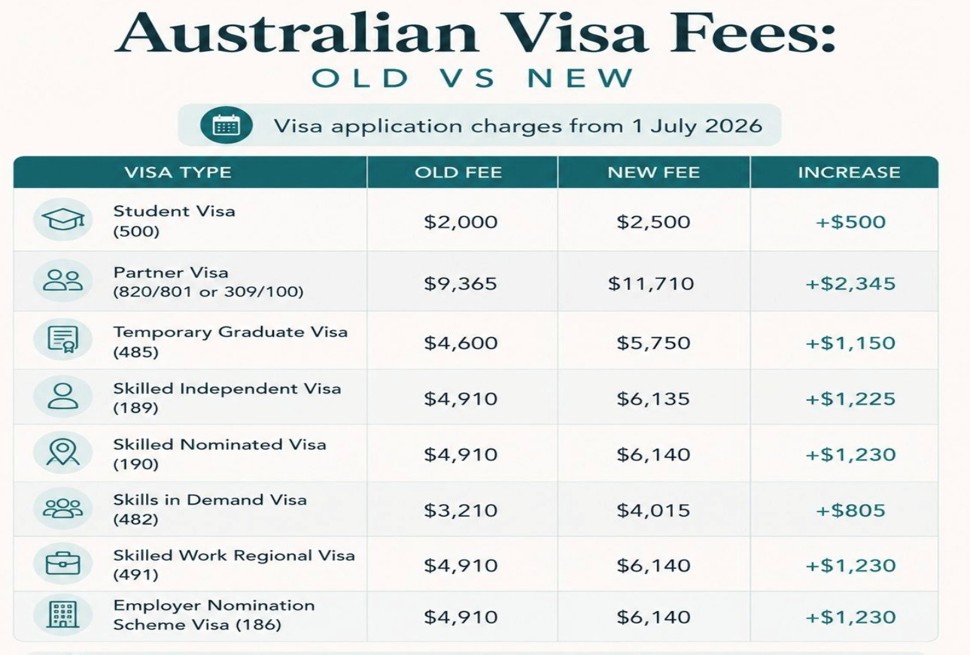
When applicants compare today’s fees with those from previous years, they’re not simply looking at the numbers they’re comparing real circumstances. Below is a sample illustration of how the costs look now compared to earlier years:
In conclusion, while visa fees may be framed as “government costs,” for many genuine applicants they can quickly become a financial and emotional burden especially when compared to previous years and weighed against today’s cost-of-living pressures. That’s exactly why careful planning is no longer optional.
If Australia is your destination, the smart approach is to map your immigration journey early, understand the full costs involved (not just the application fee), and prepare your documentation and timing with precision. Most importantly, engage professionals who can guide you through strategy not guesswork so your pathway to a visa is more structured and secure.
At Immigate, we help applicants build a planned visa strategy, reduce avoidable risks, and better protect your budget by ensuring you choose the right route from the start. With the right support, you can move forward with more clarity, less uncertainty, and stronger confidence in your future in Australia. Feel free to book a consultation with us and begin your Australian visa journey with greater peace of mind.

 Assess your visa eligibility for free